What is AI Skin Analysis? The Future of Personalized Skincare
How AI Actually Reads Your Skin: From Pixel to Prediction
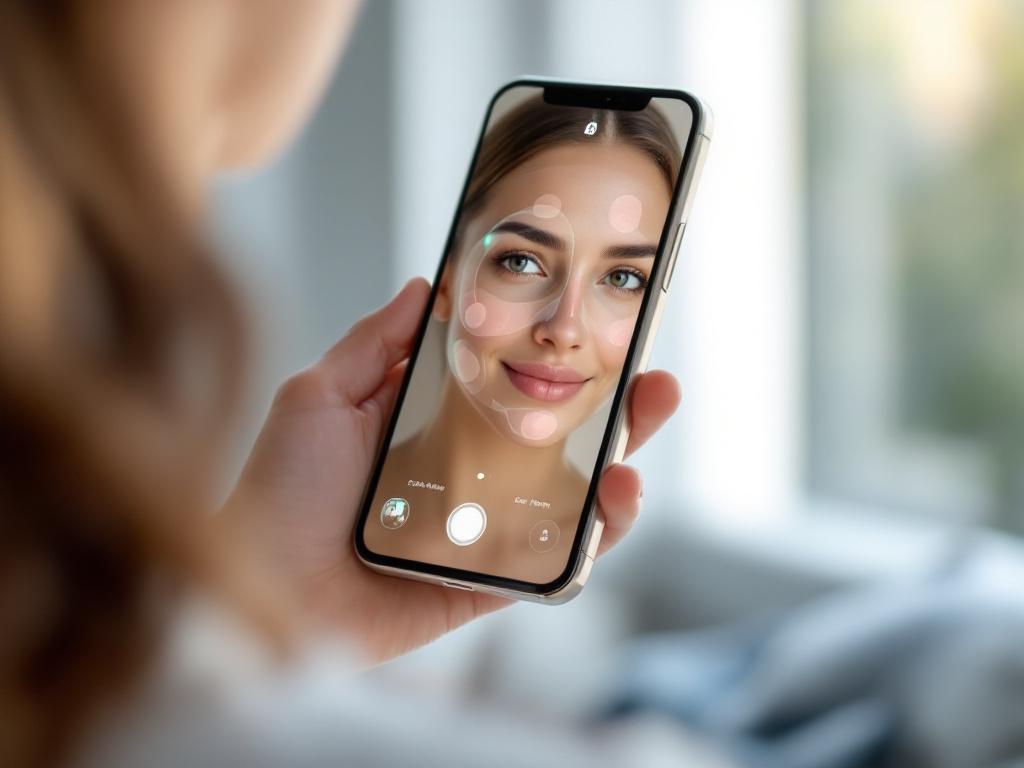
A board-certified dermatologist takes about 15 minutes to work through a focused skin exam: visual inspection under standardized light, palpation, history-taking, and pattern matching against thousands of cases they've seen. An AI skin analysis app does something narrower in 15 seconds. It runs computer vision models trained on dermatological image datasets to score what's visible in a single front-facing photo — sebum distribution across the T-zone, early dehydration cues under the cheekbones, erythema gradients, pore density mapping, and surface texture irregularities.
That's the honest framing. AI skin analysis is not a replacement for clinical diagnosis. It's a quantification layer that closes the gap between user self-assessment ("my skin looks tired") and professional dermatology ("you have a 0.4 mm depth of perioral fine lines and elevated periocular erythema"). When a Nature Medicine 2024 study reported AI achieving 94.1% accuracy versus 86.4% for dermatologists in melanoma detection, that result applied to a single, narrowly trained task — not to the general-purpose skin analysis app sitting on a consumer's phone. Conflating the two is how marketing departments build trust they haven't earned.
This article explains the mechanics, real capabilities, current tool categories, and concrete limitations of ai skin analysis. It will not crown a single "best" tool — the right choice depends on your skin tone, your goal, and your tolerance for vendor-controlled data. You'll leave with a decision checklist, not a sales pitch.
Table of Contents
- How AI Actually Reads Your Skin: From Pixel to Prediction
- Where Manual Self-Assessment Falls Apart
- The Three Capabilities That Separate Real Tools From Marketing
- A Realistic Map of Current AI Skin Analysis Tools
- The Real Limitations: Where AI Skin Analysis Fails
- A Decision Checklist for Choosing an AI Skin Analysis Tool
How AI Actually Reads Your Skin: From Pixel to Prediction
Strip away the marketing language and ai skin analysis runs through three sequential layers. Each layer has known failure modes. Understanding the pipeline makes you a sharper judge of any tool's claims.
Image Capture and Preprocessing
Consumer apps typically request a front-facing photo at arm's length under specified lighting. The better ones run a real-time quality check on the submission — rejecting images that are too dim, backlit, blurry, or framed incorrectly — before the model ever sees the photo. Lower-quality apps accept whatever you send and produce a confident score from a 200-lux bathroom selfie that no clinical photographer would tolerate.
Clinical-grade systems go further. They use multispectral imaging to capture wavelengths beyond visible light, which reveals subsurface pigmentation and vascular patterns that a phone camera cannot see. Polarized light capture reduces specular glare and exposes texture that's hidden under shine. Once an image is accepted, preprocessing aligns the face, normalizes color cast (the camera's white balance, the room's color temperature, even the user's monitor light bouncing back onto skin), and segments the face into anatomical zones: forehead, glabella, periorbital, cheeks, nose, perioral, jawline, chin.
Computer Vision Inference
Convolutional neural networks (CNNs) — and increasingly vision transformers — are trained on labeled dermatological image datasets to classify what's visible in each zone. The model outputs confidence scores, not binary diagnoses. A papule isn't flagged as "acne, yes." It's flagged as "acne lesion: 0.84 confidence." Tools that present binary "you have X" results are hiding the uncertainty behind a UI choice.
What gets classified varies by tool. Common detections include comedones, papules, pustules, post-inflammatory hyperpigmentation patches, fine lines (typically scored by orientation and depth heuristics from 2D images), pore visibility, redness gradients, and texture irregularity. Most consumer tools then collapse these per-pixel inferences into ordinal scores — a 0–100 "evenness" rating, a 1–5 "hydration" rating — because users want a number, not a probability distribution.
Recommendation Mapping
The final layer is where ai skin analysis becomes commerce. Detected conditions get matched to product databases through ingredient-condition rules: niacinamide maps to uneven tone, salicylic acid to comedonal acne, ceramides to barrier disruption, azelaic acid to perioral redness. The sophistication varies enormously. Simple tools use static lookup tables. More advanced systems apply collaborative filtering on user outcome data, weighting recommendations by what worked for users with similar detected attributes.
Two practical truths shape what you actually get. First, the AI can only score what's in the frame — a single front-facing shot misses jawline acne and side-profile texture entirely. Second, lighting determines the answer. A warm-toned room temperature shifts redness scores upward; a shadowed cheek creates false texture readings. Tools that don't lighting-gate input are not measuring your skin so much as measuring your bathroom.
What ai skin analysis cannot do, regardless of model quality: it cannot biopsy tissue, it cannot feel skin thickness, it cannot account for the medication you started three weeks ago, and it cannot ask the follow-up questions that change a clinical assessment.
| Skin Attribute | Detection Reliability | Why |
|---|---|---|
| Surface acne (papules, pustules) | High | Visible lesions, well-represented in training data |
| Pore visibility & density | High | Direct surface measurement |
| Erythema / redness | Moderate–High | Sensitive to lighting and camera color profile |
| Hyperpigmentation patches | Moderate | Reliability drops on darker Fitzpatrick types |
| Fine lines & texture | Moderate | Depends on resolution and lighting angle |
| Hydration / barrier function | Low–Moderate | Inferred from surface cues; no direct sensor |
| Subsurface pigmentation | Low (consumer) | Requires multispectral imaging |
| Mole / lesion malignancy risk | Not for consumer use | Requires regulated medical-device tools |
The table reflects patterns reported across consumer computer vision skin analysis tools. Treat it as a directional guide, not a benchmarked measurement — vendor tools rarely publish per-attribute reliability data, which is itself a piece of information about the category.
AI skin analysis doesn't replace your dermatologist. It gives you a quantified baseline so the appointment becomes about treatment, not explanation.
Where Manual Self-Assessment Falls Apart
Most people are bad at assessing their own skin, and the failure modes are predictable. Three patterns dominate.
No baseline. You look at your skin every morning. The brain adapts to gradual change. Acute breakouts get noticed; the slow drift of texture, tone unevenness, or perioral fine lines gets missed until a six-month-old photograph surprises you. The human visual system is built for novelty detection, not longitudinal tracking.
Lighting and mirror bias. Bathroom lighting is rarely consistent across the day, and almost never consistent week to week if you assess your skin at varying times. Cool morning daylight, warm evening incandescent, the bluish cast of a phone screen — each renders skin differently. A 2-millimeter post-inflammatory mark looks like nothing in flat light and like a crater in raking side-light. People generalize from whichever lighting condition they happened to be in.
Conflation of symptom and cause. Users see redness and assume rosacea. They see oiliness and assume oily skin type. They see breakouts and assume acne. These are surface signals with multiple underlying causes — a barrier-disrupted skin can present as oily because it's overproducing sebum to compensate; perioral redness can be allergic, irritant, or vascular. Self-diagnosis collapses a differential into a single label.
AI doesn't solve diagnosis. It standardizes measurement. The same lighting check, the same anatomical segmentation, the same scoring rubric every time. Skin condition tracking becomes meaningful when the measurement protocol stops drifting. The product is consistency over months, not insight in a single session.
| Dimension | Manual Self-Assessment | AI-Powered Assessment |
|---|---|---|
| Data captured | Subjective impressions | Quantified scores per zone |
| Consistency across sessions | Varies with lighting and mood | Standardized via lighting checks |
| Tracking change over time | Memory-based, unreliable past 4–6 weeks | Side-by-side image and score comparison |
| Granularity | Whole-face impression | Per-zone metrics |
| Cost | Free | Free tier to subscription |
| Personalization input | Self-reported skin type | Detected attributes plus context |
| Clinical validity | None | Variable; most tools not FDA-cleared |
The table doesn't show AI is "better." It shows AI is different. Consistent measurement is the actual product of any personalized skincare ai tool worth using. But consistency without accuracy is dangerous: a tool that reliably underestimates hyperpigmentation on darker skin will produce a confident, longitudinal record of the wrong number. The user will track a phantom. This is why the bias discussion later in this article matters more than any feature comparison — accuracy gates the value of consistency, and most tools refuse to publish accuracy data broken down by skin tone, age, or condition severity. Absence of disclosure is a finding, not a neutral fact.
The Three Capabilities That Separate Real Tools From Marketing
Most apps in this category sell the same surface promise: scan your face, get a score, buy something. Three capabilities separate the tools doing real work from the ones running a recommendation engine with a face filter.
Real-time condition mapping per anatomical zone. Meaningful condition mapping segments the face into at least six to eight zones — forehead, glabella, periorbital, cheeks left and right, nose, perioral, jawline, chin — and produces independent scores per zone. Tools that return a single "skin score" without zone breakdown are doing aggregate scoring, not mapping. That distinction matters because skincare is local: you don't apply niacinamide to your whole face if the hyperpigmentation is concentrated on the cheekbones. Before paying for any tool, check whether it shows you where on the face the issue sits. If it can't, it cannot help you target product application, and you're paying for a number that obscures more than it reveals.
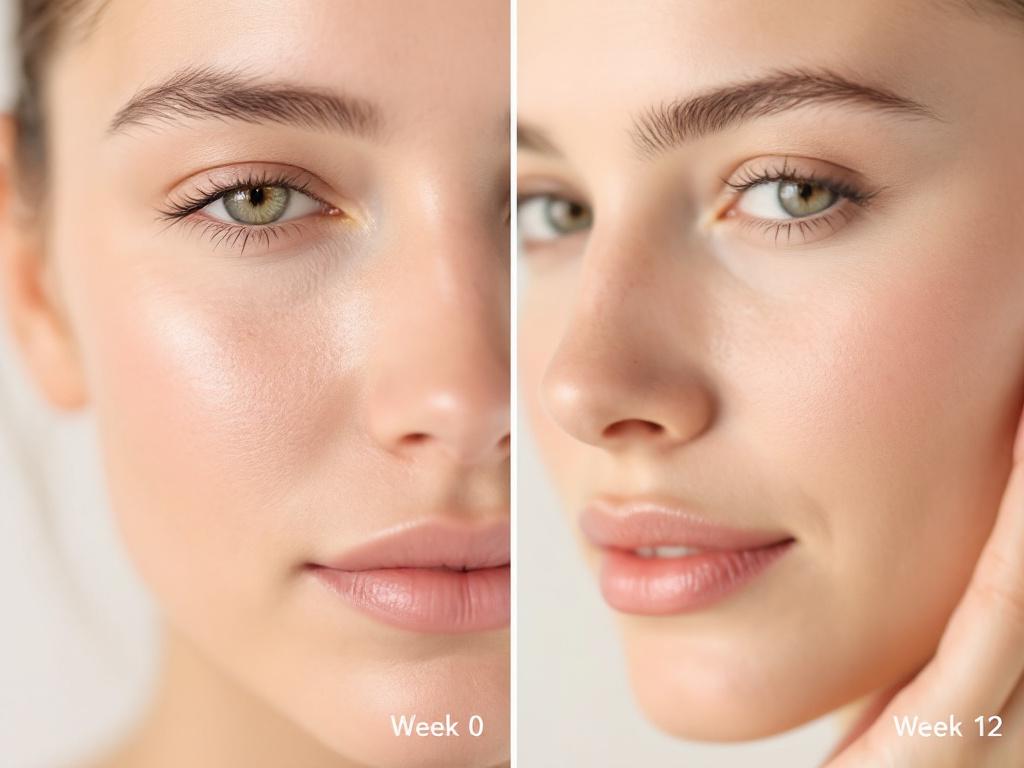
Longitudinal tracking with image-anchored comparison. The AI's value is cumulative. A useful tool stores baseline images, re-scores subsequent submissions using the same model version, and surfaces side-by-side comparisons at fixed intervals — 4-week and 12-week checkpoints align with how skin actually responds to active ingredients. Watch for a quiet trap: some vendors update their underlying model silently, which makes prior scores incomparable to current ones. A user who started with a "hydration score of 62" under Model v2.1 and now sees "78" under Model v3.0 has no idea whether their skin improved or the scoring rubric shifted. Ask the vendor whether scores are versioned. If support can't answer, your tracking history is unreliable.
Ingredient-condition matching with formulation logic, not keyword matching. "Oily skin → oil-control serum" is not personalization. Sophisticated matching considers detected condition plus severity plus adjacent conditions — oily skin with barrier disruption needs a different formulation than oily skin alone — plus ingredient compatibility, including stacking warnings for retinoids with AHAs or benzoyl peroxide with vitamin C. Test any tool by submitting a clearly inflamed-looking photo and watching what it recommends. Gentle barrier repair is a defensible answer. Aggressive actives layered on visibly inflamed skin is a red flag — it means the recommendation engine is optimizing for catalog coverage, not skin outcome.
A Realistic Map of Current AI Skin Analysis Tools
The market reorganizes itself every quarter — products get rebranded, features migrate across categories, and vendor positioning shifts. The categories below outlast specific products. Map your goal to a category first, then evaluate individual tools within it.
Brand-affiliated diagnostic apps are photo-based, score-based, and recommend the parent brand's own products. They're useful for routine monitoring inside a single brand ecosystem and biased — predictably and disclosed — toward in-house catalog. The recommendation layer is a marketing channel.
Independent skincare-recommendation apps match across brands and monetize through affiliate revenue. Detection scope is similar to brand apps; recommendation scope is wider. The bias shifts from "in-house catalog" to "highest-affiliate-margin product that fits the detected condition," which is a different distortion, not the absence of one.
Regulated screening tools — apps focused on lesion or mole risk assessment — are categorized as medical devices in some jurisdictions and undergo regulatory review. They focus narrowly on one task, typically triage of suspicious lesions, and are not general skincare tools. Using one for routine skin monitoring misuses its design; using a beauty app for mole assessment misuses that design in the opposite direction.
Clinical-grade in-office systems — multispectral imaging platforms used in dermatology offices and medspas — produce reports that go well beyond consumer apps. Subsurface pigmentation, UV damage maps, vascular patterns. They're not for home use, they require trained operators, and the report only delivers value when paired with a clinician's interpretation.
AI features inside dermatology telehealth platforms use AI as a triage layer before a human provider reviews the case. For most general users, this is the most clinically useful dermatology ai category — the AI's output is checked, the recommendations carry professional accountability, and the regulatory framing is clearer.
| Category | Input | Detection Scope | Output | Best Used For |
|---|---|---|---|---|
| Brand diagnostic app | Single selfie | Surface; brand-specific | Score + brand product list | Routine monitoring in one brand |
| Independent recommender | Selfie + questionnaire | Surface; cross-brand | Score + multi-brand suggestions | Ingredient discovery |
| Regulated screening tool | Lesion close-up | Single task (mole risk) | Risk category + referral | Triage of specific concern |
| Clinical-grade in-office | Multispectral capture | Surface + subsurface | Detailed report | Professional treatment planning |
| Telehealth-embedded AI | Selfie + intake | Surface | Triage reviewed by clinician | Most balanced for general users |
The choice depends entirely on your goal. Someone curious about ingredient discovery should not use a regulated screening tool — it's not designed for that and won't produce useful output. Someone with a worrying mole should not use a brand diagnostic app — the app's terms of service explicitly disclaim that use, and the model wasn't trained for it. Someone tracking the effect of a new retinoid over 12 weeks needs a tool with stable model versioning, which most free apps don't provide.
There's a silent bias across the entire free-tier market: free tools recommend products from sponsors. The recommendation engine is the monetization layer. Treat it that way. The detection scores may be honest; the product list that follows is, structurally, an ad. That's not a moral judgment — it's an economic description, and reading the screen with that frame in mind is the difference between a useful tool and a checkout funnel.
The best AI skin tool is the one you'll actually use consistently. A 70-percent-accurate app you check monthly beats a 95-percent-accurate tool gathering dust on your phone.
The Real Limitations: Where AI Skin Analysis Fails
This section earns the article its credibility. Ai skin analysis accuracy is a marketing claim until you specify accuracy for whom, under what conditions, and for which task. Four limitation categories matter most.
Training-data bias against darker Fitzpatrick types (IV–VI). Dermatology AI has a documented history of underperforming on darker skin tones. The reason is structural: foundational dermatological image datasets were heavily skewed toward lighter Fitzpatrick I–III phototypes, reflecting historical clinical photography in academic dermatology that disproportionately captured lighter-skinned patients. Models trained on those datasets carry the bias forward. The downstream consequences: hyperpigmentation can be misclassified as a primary condition rather than a post-inflammatory sequela, melanoma cues that present differently on darker skin (acral and subungual presentations, for instance) can be missed, and erythema scoring drops in reliability because flushing presents with different visual cues on melanin-rich skin. Ask any tool: what is your model's reported performance across Fitzpatrick types? If the vendor doesn't publish that data, that silence is the answer. In practice, most consumer apps don't publish it.
Mole and lesion assessment is not a consumer-app function. Skin cancer screening is regulated as a medical-device function in the EU under MDR (typically Class IIa for diagnostic-support software) and triggers FDA scrutiny in the US under 510(k) or De Novo pathways. Most consumer skincare apps explicitly disclaim this use in their terms of service. A user who opens a beauty app to "check a mole" is misusing the tool — the model wasn't trained for that task, the regulatory framework doesn't cover it, and the false-negative cost is measured in months of delayed diagnosis. The 94.1% accuracy figure that circulates from research literature applies to specifically trained, narrow-task models evaluated under controlled conditions. It does not transfer to consumer skincare apps. Anyone citing that number to validate a beauty app is either confused or selling something.
False positives in acne and texture classification. Consumer apps frequently flag normal pores, ordinary post-inflammatory marks, or temporary redness as actionable conditions. The asymmetry of vendor incentives shapes this: a false positive sells more product; a false negative loses a sale. Apps are calibrated accordingly. A tool that confidently tells you your skin is fine — when your skin is, in fact, fine — generates no revenue. A tool that finds three "areas of concern" generates a serum recommendation, an affiliate click, and a follow-up scan in two weeks. The math runs one direction. This doesn't make every flagged condition fake; it means the threshold for flagging is set lower than a clinical threshold, and over-treatment is the predictable outcome.
Lighting, camera, and individual variability. Different phone cameras produce different color profiles. iPhone front cameras render skin warmer; recent Google Pixel front cameras render cooler; Samsung's processing pipeline applies its own skin-smoothing. The same skin scored across two devices will produce different numbers, and a user who upgrades their phone mid-tracking has effectively reset their baseline without realizing it. For longitudinal tracking to be meaningful, use the same device, in the same location, at the same time of day, with the same window light. That's not a perfectionist demand — it's the minimum protocol for the numbers to compare.
Bias in AI skin analysis isn't a flaw to ignore. It's a question to ask every tool: how was this trained, and whose skin was in the dataset?
Reframe the limitations honestly. AI skin analysis is a layer, not the layer. Dermatologists assess context, history, palpation, full-body distribution, family pattern, and medication interaction — none of which any current consumer tool replicates. The tool's job is to give you a consistent, zone-resolved baseline. The clinician's job is everything else. Treating them as substitutes underuses both.
A Decision Checklist for Choosing an AI Skin Analysis Tool
Walk through this checklist with a candidate tool open on your phone. Each item takes a minute. The whole audit takes ten.
1. Define the goal first, tool second. Are you monitoring routine skin, tracking the effect of a new active, discovering products, or screening for a specific concern? The category of tool follows the goal. A mole concern goes to a regulated screening tool or a dermatologist — not a beauty app, regardless of how good the beauty app's marketing looks.
2. Check Fitzpatrick representation in the training data. Look for any vendor disclosure of model performance across skin tones. Most tools don't disclose this. Absence of the information is itself information, and it should weight your decision against the tool — especially if you have Fitzpatrick IV–VI skin and the tool's marketing imagery shows only lighter phototypes.
3. Audit the input requirements. Does the tool require multiple angles or a single front shot? Does it lighting-gate the submission before accepting it? Does it work with your phone's camera at a reasonable distance? Tools that accept any image without quality gating produce low-quality scores, and the score will read as confident regardless. Quality gating is a sign the vendor takes the measurement seriously.
4. Look for a professional loop. Telehealth-integrated tools where a clinician reviews the AI's output offer a meaningful safety net — the AI flags, the human decides. Pure-AI tools without clinical review carry the full burden of model error onto the user. For anyone with a skin condition that has crossed from cosmetic concern into medical territory, the professional loop is the difference between a tool and a liability.
5. Test the recommendation engine for incentive bias. Submit the same photo twice with different self-reported budgets — once at "$" and once at "$$$". If the recommendations shift toward more expensive products despite identical detected conditions, the engine optimizes for revenue, not skin. The detection layer may still be honest; treat the recommendations with appropriate skepticism.
6. Verify model versioning for tracking. If you plan to use the tool for longitudinal skin condition tracking, ask whether scores are stable across model updates. Silent retraining invalidates your history. A vendor that can't answer this question is telling you their tracking feature isn't built for serious longitudinal use, regardless of how the marketing describes it.
7. Read the privacy and data-use policy. Facial biometric data is among the most sensitive categories of personal information. Check whether the vendor sells data to third parties, whether images are retained after analysis, how long retention lasts, and whether you can delete your account and underlying data on request. The relevant section of the policy is usually findable with a search for "biometric" or "facial." If the policy is vague, assume the worst case.
8. Use the free tier before paying. Most tools offer a free first scan. If the first interaction doesn't surface anything you didn't already know — if the score confirms what your mirror told you and the recommendations are products you've already considered — the paid tier won't deliver more. Pay for tools whose free tier produced new information, not for tools whose free tier produced confident reassurance.
Pick one tool from the checklist, run a baseline scan today, and re-run it in 12 weeks under the same conditions. That's the experiment. Everything else is reading.