AI Skin Color Changer Tools: Technology, Ethics, and Applications
Table of Contents
- Four Architectures for Skin-Tone AI Features — and the Hidden Failure Mode in Each
- The Pixel Problem Is Solved. The Ingredient Problem Isn't.
- Wiring an Ingredient Safety Layer Into a Skin-Tone Pipeline: The Request Flow
- Where Dermalytics Sits in the Beauty-Tech API Landscape
- Evaluation Checklist: Should Your Skin-Tone AI Feature Include an Ingredient Layer?
You typed "ai skin color changer" into a search bar because something on your roadmap requires it — a virtual try-on, a brightening simulation, a shade-inclusivity audit, or a consumer filter feature your PM committed to last quarter. The phrase is a placeholder for at least four different engineering problems, and the one you're actually solving determines whether you ship a feature or a liability. This article unpacks those four problems, the architectures developers reach for, and the data layer that quietly determines whether any of them survive a regulatory review or a refund spike.
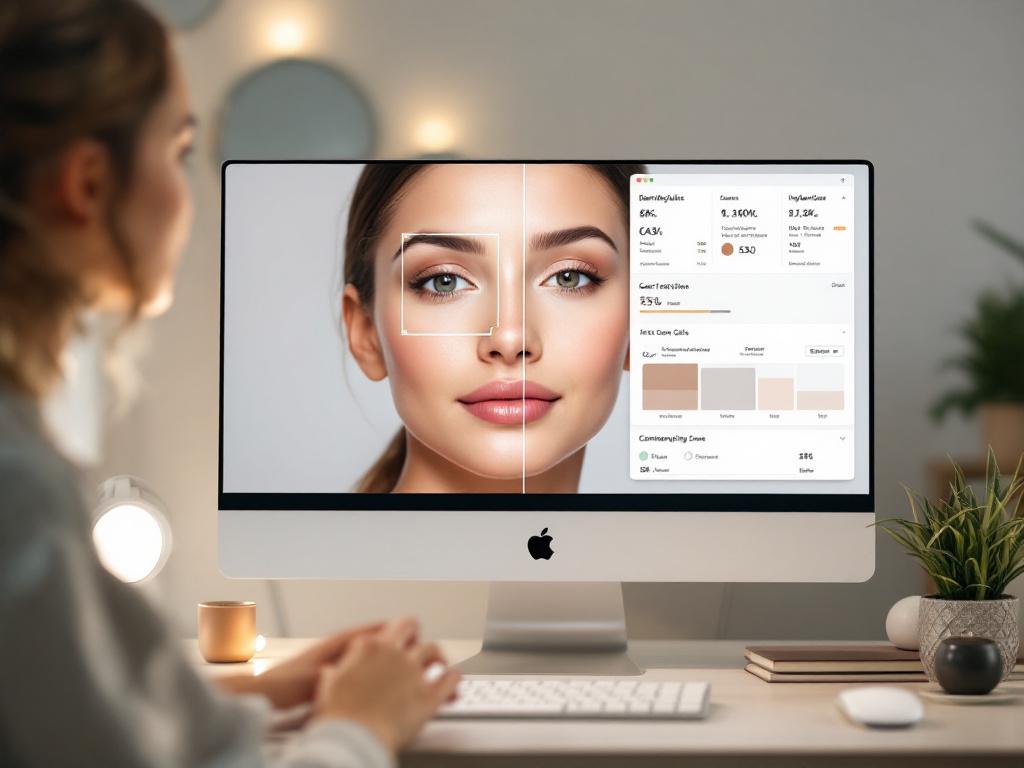
The search phrase ai skin color changer maps to four distinct developer use cases, and conflating them is the first mistake teams make in scoping.
The first is virtual try-on and shade matching — applications that overlay foundation, concealer, or self-tanner shades on a user's selfie. This is the dominant use case for DTC cosmetics brands needing AR previews on product pages. The visual layer here is mature; the recommendation logic underneath rarely is.
The second is tone correction and before-after visualization — applications that simulate skincare results, such as a brightening serum's projected effect after four weeks or hyperpigmentation reduction over a treatment cycle. These features carry implied efficacy claims that attach regulatory exposure to whatever product is rendered on screen.
The third is inclusive shade-range tooling — internal applications used by beauty brands to validate coverage across Fitzpatrick skin types I through VI. This is a B2B workflow, not a consumer feature, and it requires that every SKU surfaced during the audit can be cross-referenced against ingredient-level safety data per region.
The fourth is filter and aesthetic editing — consumer photo filters that change skin tone for entertainment. Commercially, this category is the lowest-value and the highest regulatory-risk use case. It is also the one most likely to draw misaligned traffic to a serious beauty-tech product page.
Use cases one through three are commercially serious, and all three break in the same place: the visual layer ships, but the ingredient data layer underneath is missing, scraped from inconsistent sources, or maintained manually in a spreadsheet by someone who left the company. A try-on that recommends a foundation it cannot verify for comedogenicity, or a brightening simulation tied to a product containing a flagged allergen for that user's profile, is a refund event waiting to happen.
This problem is not new. According to a 2025 NIH-indexed review on AI in dermatology, aesthetic dermatology AI has historically suffered from methods that "remain subjective and lack standardization." The clinical literature is describing the same gap that breaks beauty-tech software: a visual layer ships fast, but the structured ground truth underneath it never arrives. Pixels are cheap; verified ingredient safety per SKU, per user, per jurisdiction is not.
A skin-tone AI without ingredient ground truth is a rendering engine pretending to be a recommendation engine.
The rest of this article delivers a build-vs-buy framing for the visual layer, walks through the four architectures product teams actually evaluate, and lays out the integration pattern for putting structured ingredient data — specifically the kind exposed by the Dermalytics API — beneath any of these tools. The argument is not that you should pick a different feature. It is that the feature you picked is half-built.
Four Architectures for Skin-Tone AI Features — and the Hidden Failure Mode in Each
Product teams scoping an AI skin color changer feature converge on four common architectures. Each has a real engineering rationale. Each also has a failure mode that does not appear in the architecture diagram.
Open-source computer vision models — MediaPipe, OpenCV, or a custom UNet trained on your own labeled dataset — give you maximum flexibility and zero licensing cost. Your engineering team owns segmentation, tone mapping, and the rendering pipeline end to end. What you do not get is any product or ingredient metadata. A bounding box around a face does not know what foundation to recommend, what allergens to filter, or what jurisdiction the user is shopping from.
Commercial AR and try-on SDKs ship a polished UX in days. The trade is that you inherit the vendor's product universe — their shade catalog, their taxonomy, their refresh cadence. If a brand on your platform launches a new SKU, you wait. If a user has fragrance sensitivity, the SDK does not know.
In-house generative models — diffusion-based tone simulation, GAN-based aging or brightening previews — deliver the highest realism. They also take months, produce unpredictable output drift between training runs, and have zero connection to real product SKUs or ingredient safety data. The output is a plausible image, not a defensible product recommendation.
A hybrid stack pairs a CV layer with a structured ingredient API. The visual model handles pixels. The ingredient API decides which products are eligible to be visualized for a given user — excluding products with high comedogenicity for acne-prone profiles, filtering EU-restricted substances for European users, surfacing only verified-safe SKUs for sensitive-skin segments.
| Architecture | Time to Ship | Catalog Ownership | Ingredient Safety Coverage | Best For |
|---|---|---|---|---|
| Open-source CV (MediaPipe/OpenCV) | Weeks to months | You build it | None out of the box | Research, internal tools |
| Commercial AR/try-on SDK | Days to weeks | Vendor-locked | Limited to vendor catalog | Single-brand DTC |
| In-house generative model | Months | You build it | None | Brands with ML maturity |
| CV layer + ingredient API | Days to weeks | You own it | Full via API | Multi-brand marketplaces, scanners |
The hidden failure mode common to the first three architectures: the visual output is decoupled from product reality. A user gets shown a shade. The underlying SKU may contain a flagged allergen for that user's profile. The visual layer cannot know this — it operates on pixels, not on chemistry.
Path four is the only architecture that scales across regulatory jurisdictions and product catalogs without requiring you to rebuild ingredient infrastructure every time you add a brand. The Dermalytics API exposes more than 25,000 indexed ingredients, drawn from FDA, EU CosIng, and Health Canada sources, normalized for programmatic use with CAS and EC identifiers, synonyms, severity labels, and numeric scoring on a 0–5 scale for both comedogenicity and irritancy (dermalytics.dev). The endpoints are two: a single-ingredient lookup at GET /v1/ingredients/{name} for inline checks, and a batch analyzer at POST /v1/analyze that accepts a full INCI list and returns a structured response per ingredient plus an overall safety_status.
Why does this matter for the architecture choice? Because the cost of the visual layer is fixed. The cost of the data layer compounds with every brand you add, every region you expand into, and every regulatory update you miss. Building that layer in-house is a perpetual engineering tax. Renting it through a typed contract converts the tax into a line item — and frees your engineering team to ship the feature your PM actually committed to.
The Pixel Problem Is Solved. The Ingredient Problem Isn't.
Face detection, segmentation, and tone manipulation are commodity machine learning problems in 2025. MediaPipe ships pre-trained models that run on-device. Open diffusion weights produce photorealistic tone simulations. Off-the-shelf libraries handle Fitzpatrick classification with high enough accuracy for commercial AR. The hard problem moved upstream: making sure the products being visualized are safe, compliant, and matched to the user's skin profile.
Three concrete failure scenarios illustrate where visual-only beauty AI breaks.
A virtual try-on shows a foundation in a user's exact shade. The user has flagged "fragrance sensitivity" during onboarding. The foundation contains Linalool, a common fragrance allergen restricted as a labeling requirement under EU Regulation 1223/2009. Without an ingredient API in the request path, the application has no programmatic way to filter this SKU before rendering it. The user purchases, reacts, and leaves a one-star review citing your app's recommendation by name.
A "before and after" brightening simulation displays a serum's projected result over four weeks. The serum contains Hydroquinone at a concentration above EU-permitted limits for cosmetic use. The application is now showing a non-compliant product to European users — and the implied efficacy claim attaches the regulatory exposure directly to your platform, not just the brand.
An e-commerce platform's recommendation engine surfaces tinted moisturizers ranked by shade match for a user who has flagged acne-prone skin. Three of the top five SKUs returned have comedogenicity scores between 4 and 5. The user buys the top result, breaks out, returns the product, and stops trusting the recommendation engine. Conversion drops on the entire shade-match feature. Refund rate climbs across the SKU set.
Each of these failures is preventable with structured ingredient data in the filter step. The Dermalytics response object exposes the exact fields needed: severity labels per ingredient, comedogenicity on a 0–5 scale, irritancy on a 0–5 scale, an overall safety_status per analyzed formulation, and regulatory metadata sourced from FDA, EU CosIng, and Health Canada (dermalytics.dev). A filter expression as simple as "reject any SKU where any ingredient has comedogenicity > 2 AND user.profile.acne_prone = true" eliminates the third scenario entirely.

The NIH review on AI in dermatology names the underlying issue: standardization. Clinical aesthetic AI suffers from inconsistent endpoints, inconsistent severity scales, and inconsistent ground truth. The software analog is identical. An ai skin color changer that ships against a scraped or community-edited ingredient source inherits that source's inconsistencies — its missing CAS numbers, its untranslated synonyms, its outdated restriction lists. Standardization at the ingredient level is what makes the visual layer commercially defensible. Without it, the feature renders correctly and fails everywhere else.
Face detection became commodity ML three years ago. Ingredient compliance never did.
There is also a more subtle commercial dimension. Visual-only features generate engagement metrics that look healthy in a dashboard — time-on-page, AR session length, shade swaps per session. None of those metrics correlate with downstream purchase quality or post-purchase satisfaction. Adding a verified ingredient filter changes which products surface at the top of the recommendation list. That changes which products users buy. That changes refund rates, repeat-purchase rates, and the long-tail health of the catalog. The visual layer drives engagement; the ingredient layer drives revenue quality.
Wiring an Ingredient Safety Layer Into a Skin-Tone Pipeline: The Request Flow
The integration pattern beneath a production skin-tone feature is straightforward once the architecture is clear. Six steps, two of which call the ingredient API.
Step 1 — Capture. The front end captures a user selfie. The user profile, populated during onboarding, includes flags for skin concerns (acne-prone, fragrance-sensitive, pregnancy-safe required), Fitzpatrick estimate, and region (EU, UK, US, CA). This metadata is the input to every filter downstream.
Step 2 — Visual inference. The CV model — open-source or vendor — returns a matched Fitzpatrick tone and a shade family. This is the only step where pixel data matters. After this step, the rest of the pipeline operates on structured product metadata.
Step 3 — Catalog query. Your product catalog returns N candidate SKUs whose declared shade matches the inferred shade family. For a well-stocked marketplace, N is typically 20–80 candidates before filtering.
Step 4 — Ingredient resolution. For each candidate SKU, the full INCI list is sent to POST /v1/analyze. The batch endpoint returns a structured response per ingredient: severity, comedogenicity (0–5), irritancy (0–5), CAS and EC identifiers, synonyms, and an overall safety_status for the formulation (dermalytics.dev). Median latency on this call sits below 100ms, which keeps the full round-trip inside the budget for an interactive try-on UX.
An illustrative response shape (consult the OpenAPI 3 contract at api.dermalytics.dev for the real schema):
{
  "safety_status": "caution",
  "ingredients": [
    {
      "name": "Aqua",
      "cas": "7732-18-5",
      "comedogenicity": 0,
      "irritancy": 0,
      "severity": "none"
    },
    {
      "name": "Linalool",
      "cas": "78-70-6",
      "comedogenicity": 0,
      "irritancy": 2,
      "severity": "allergen_eu_labeling"
    },
    {
      "name": "Isopropyl Myristate",
      "cas": "110-27-0",
      "comedogenicity": 5,
      "irritancy": 1,
      "severity": "comedogenic"
    },
    {
      "name": "Tocopherol",
      "cas": "59-02-9",
      "comedogenicity": 0,
      "irritancy": 0,
      "severity": "none"
    }
  ]
}
Step 5 — Filter. Application logic removes SKUs where any ingredient exceeds the thresholds derived from the user profile. Comedogenicity above 2 fails for acne-prone users. Any ingredient with severity: allergen_eu_labeling fails for fragrance-sensitive users. Any ingredient flagged for jurisdictional restriction fails for users in the corresponding region. The filter is a few lines of code per concern, executed in-memory after the API response returns.
Step 6 — Render. The filtered, safety-validated SKU set is passed back to the visual layer for try-on rendering. The user sees only shades the system can stand behind.
A few operational notes worth flagging. The credit-based pricing model only charges on successful matches, which matters because beauty catalog INCI strings are notoriously noisy — misspellings, trade names mixed with INCI names, and proprietary "complex" labels are common. Paying only for matches aligns cost with delivered data. The 99.9% uptime SLA matters because this call sits in a checkout-adjacent flow; a failed lookup at the wrong moment kills conversion. SDKs are published on npm and PyPI, which removes the auth-and-retry boilerplate that typically adds days to a first integration. The full API contract is published as OpenAPI 3 at api.dermalytics.dev, which means typed clients can be generated in any major language and code review can happen against a stable schema rather than ad-hoc curl examples.
The shape of the integration is intentionally boring. That is the point. The interesting engineering belongs in the product surface — the AR rendering, the recommendation UX, the personalization logic. The ingredient data layer should be a typed dependency, not a project.
Where Dermalytics Sits in the Beauty-Tech API Landscape
Developers searching for ai skin color changer tooling typically also evaluate three adjacent categories: visual try-on SDKs, consumer-facing ingredient apps that expose limited API access, and public web-based ingredient databases that require scraping. These categories overlap in marketing copy and diverge sharply in technical contract.
The honest comparison is categorical, not quantitative. Visual try-on SDKs operate at the rendering layer; they have no opinion on ingredients because they are not in that business. Consumer ingredient apps were designed to serve a mobile end-user, and their API surfaces — where they exist — typically reflect that origin: rate-limited, opaque on sourcing, and missing the regulatory metadata required for jurisdictional filtering. Web-based ingredient databases were built for human research, not programmatic access; integrating them at scale requires scraping, which carries its own legal and maintenance burden.
| Category | Primary Use Case | Regulatory Sourcing | Programmatic Contract | Pricing Basis |
|---|---|---|---|---|
| Visual try-on SDKs | Render shades on selfie | N/A (visual layer) | Proprietary | Per-session / MAU |
| Consumer ingredient apps | End-user lookup | Varies / opaque | Limited | Per-call / scraped |
| Web ingredient databases | Manual research | Mixed | None / scraping | Free / ad-supported |
| Dermalytics | Programmatic ingredient intelligence | FDA, EU CosIng, Health Canada | OpenAPI 3 | Credit, on match only |
The category positioning matters more than feature-by-feature comparison. Visual SDKs and ingredient APIs are complements, not competitors — they live at different layers of the stack. The serious architectural question is not "which one do I pick." It is "which ingredient data source can I trust to be the backbone of the next five beauty features I ship, not just this one."
That framing reframes the procurement decision. A virtual try-on SDK serves one feature: AR rendering. A consumer-grade ingredient lookup serves another feature: a glorified search box. Structured ingredient intelligence — 25,000+ indexed records with CAS/EC identifiers, sub-100ms median latency, regulatory sourcing from three jurisdictions, an OpenAPI 3 contract, official SDKs on npm and PyPI, and credit-based pricing that bills only on successful matches (dermalytics.dev) — serves an arbitrary number of downstream features. An ingredient scanner uses the same single-ingredient lookup. A formulation analyzer uses the same batch endpoint. An allergen warning system uses the same severity field. A pregnancy-safety filter uses the same regulatory metadata. The integration cost is paid once.
That is the build-vs-buy axis worth optimizing for: not the cost of this feature, but the marginal cost of the next one.
Evaluation Checklist: Should Your Skin-Tone AI Feature Include an Ingredient Layer?
If you answer "yes" to three or more of the following, your skin-tone feature is incomplete without a structured ingredient data layer underneath.

1. Your application surfaces products by skin tone, type, or concern. Any shade match that leads to a product recommendation makes ingredient safety part of the recommendation contract. The user assumes the system has checked. If the system has not, the failure mode lands on your support team and your review pages.
2. You operate in or sell into the EU, UK, or Canada. Regulatory restrictions on cosmetic ingredients diverge sharply by jurisdiction. EU CosIng tracks restrictions that FDA does not enforce; Health Canada maintains a separate Hotlist. Manual maintenance of jurisdictional restriction lists across more than a few dozen SKUs is not a sustainable engineering posture.
3. Your catalog exceeds 500 SKUs or pulls from multiple brand sources. INCI lists are inconsistent across suppliers. The same ingredient appears under different trade names, mixed casings, and partial translations. A normalized API exposing CAS and EC identifiers plus synonym mappings is the only sustainable way to deduplicate and cross-reference at catalog scale.
4. Users provide skin-concern profiles during onboarding. Profiles are dead weight if downstream catalog logic cannot filter against them. Numeric comedogenicity and irritancy fields on a 0–5 scale make the filter step trivial — a single threshold expression per concern, evaluated server-side at request time.
5. You display before-and-after or simulated efficacy results. Implied efficacy claims attach regulatory exposure to whichever product is rendered. Verified ingredient status — sourced from regulatory bodies rather than community edits — reduces that exposure and provides documentation if the claim is ever challenged.
6. Your team has fewer than five engineers. Maintaining an in-house ingredient database is a full-time job for at least one person, plus ongoing legal review for restriction-list updates. The right architectural move at small team size is to outsource the data layer and keep engineering focused on the product surface that differentiates you.
7. You need sub-second response times in interactive flows. A try-on or recommendation feature with perceptible lag dies in user testing. Sub-100ms median latency at the ingredient layer keeps the full round-trip — capture, inference, catalog, ingredient check, render — inside the budget for a smooth UX.
8. Your finance team objects to per-call pricing on noisy catalogs. Beauty catalog data is notoriously dirty; failed lookups are common. Credit-based pricing that bills only on successful matches aligns cost with delivered data rather than charging for every malformed string your scraper picked up overnight.
9. You expect to ship more beauty features in the next twelve months. An ingredient API installed once becomes infrastructure for ingredient scanners, formulation analyzers, allergen warnings, pregnancy-safe filters, and recommendation engines — not just the current feature. The marginal feature cost drops sharply after the first integration.
10. You need an audit trail for compliance review. Regulatory-sourced data — FDA, EU CosIng, Health Canada — provides traceability that scraped or community-edited sources cannot. When a regulator, a brand partner, or an insurance underwriter asks why a specific product was filtered or surfaced, you need a defensible answer that points to a named source, not a Wikipedia snapshot.
Install the ingredient data layer once; it becomes infrastructure for every beauty feature you ship after this one.
The lowest-friction starting point is the single-ingredient lookup endpoint at GET /v1/ingredients/{name}. It returns the same structured response shape as the batch analyzer, runs against the same 25,000-ingredient index, and lets you validate the data quality against your own catalog before committing to a deeper integration. From there, the batch endpoint at POST /v1/analyze takes a full INCI list and returns per-ingredient analysis plus overall safety_status in a single round trip. Official SDKs on npm and PyPI handle authentication and retry. The full OpenAPI 3 contract is published at api.dermalytics.dev for typed client generation. The credit model means the first integration session costs you only what it actually resolves.
Your ai skin color changer is the visible half of the feature. The data layer underneath is the half that determines whether it stays shipped.