The Complete Guide to Face Masks in Your Skincare Routine
Face Masks in Skincare Routines: Why Ingredient Data Beats Marketing Copy
You're standing in front of forty SKUs. Three claim "brightening," five say "detoxifying," two are labeled "for sensitive skin" in a font that suggests confidence rather than evidence. You pick one, take it home, apply it for fifteen minutes, and either nothing happens or your cheeks are red for two days. The selection failed because the decision was made on packaging, not on the INCI list folded onto the back panel in 5-point type. Face masks skincare decisions are, almost without exception, ingredient-data problems dressed up as product-category problems.
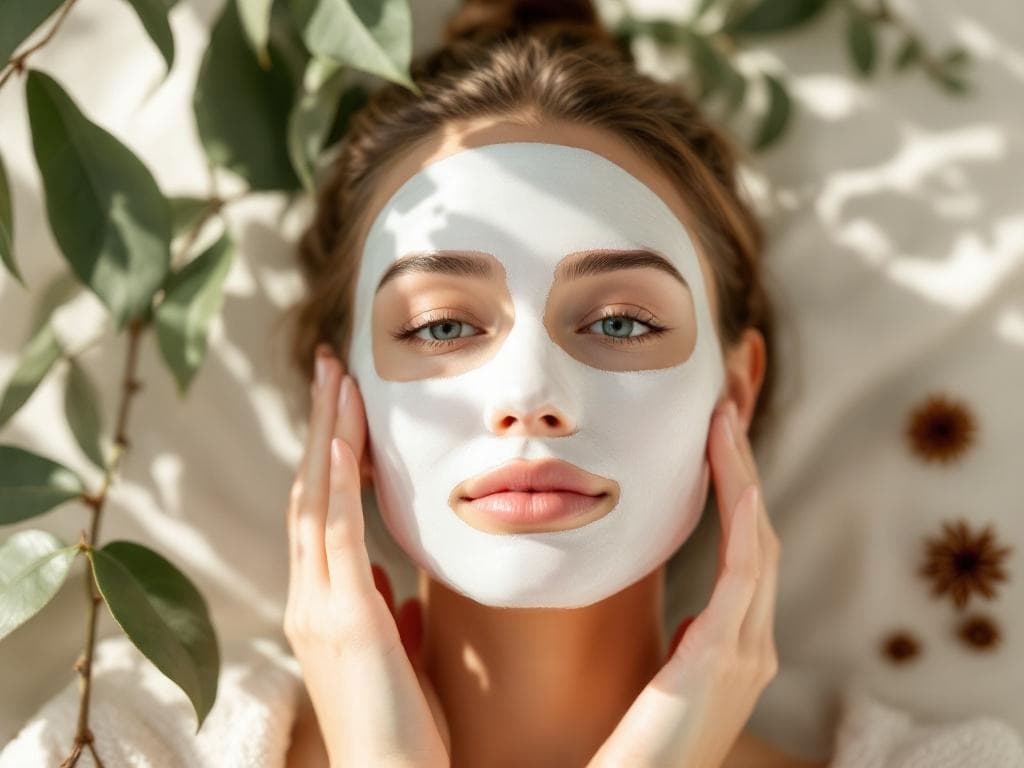
A face mask is not a meaningfully distinct product type. It is a delivery vehicle: one to three active molecules suspended in a stabilizer-and-preservative matrix, applied at higher concentration than a serum and held against the skin for ten to thirty minutes. That fifteen-minute occlusive event is what makes mask selection different from picking a moisturizer. The actives have time to penetrate. The vehicle has time to interact. The barrier has time to react — favorably or otherwise.
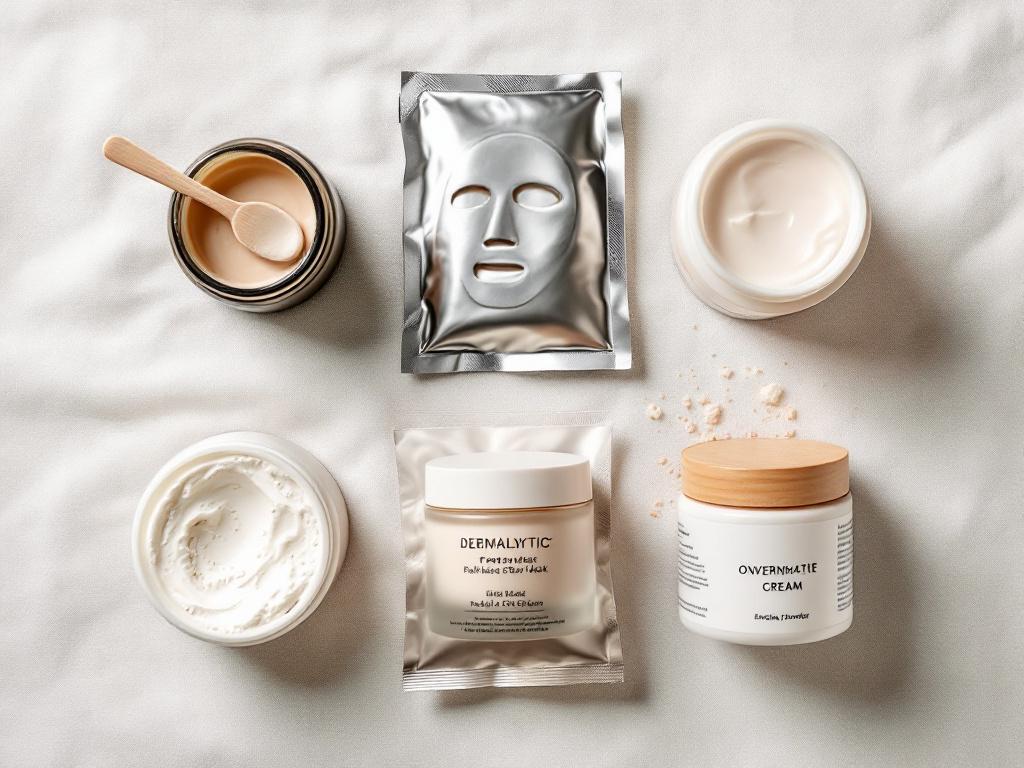
The variable space is wider than most product pages admit. Clay masks bind sebum and are typically applied once or twice weekly. Sheet masks sit at 15–20 minutes of contact time per common vendor application guidance from Tatcha and Silver Mirror. Peel-off formats use film-formers like polyvinyl alcohol that mechanically lift surface debris. Overnight occlusives trade contact time for active concentration, leveraging six to eight hours of hydration window. Enzymatic masks use proteolytic enzymes (papain, bromelain) for surface turnover. Rubber/modeling masks combine alginate gels with serum infusions. Each format pairs with a different active load and a different barrier-state assumption.
A face mask is not a product category. It is a 15-minute occlusive event that concentrates one to three active molecules against a permeable barrier — and that is an ingredient-data problem, not a marketing problem.
This guide addresses two readers in parallel. The first is the end-user who wants a diagnostic framework instead of a guess. The second — and the one shaping how this is written — is the developer or product team building skincare apps, ingredient scanners, e-commerce product pages, or formulation-compliance tooling, who needs structured ingredient data at scale rather than a marketing taxonomy. If you are wiring a recommendation surface, every section below maps to a data field your system needs to model. The Dermalytics API indexes over 25,000 cosmetic ingredients, normalized across FDA, EU CosIng, and Health Canada, with structured fields including comedogenicity and irritancy scores (0–5), CAS/EC identifiers, synonyms arrays, and overall safety_status — returned at sub-100ms median latency. That is the data layer the diagnostic framework below assumes.
What follows is a seven-stage logic chain: skin profile → ingredient literacy → routine sequencing → safety flags → concern-targeting → troubleshooting → developer integration. Each stage is also a data layer. Read it as a guide, build it as a pipeline, or both. The argument throughout is the same: face masks skincare is solvable when you treat the INCI list as the source of truth and the marketing copy as ambient noise.
Table of Contents
- Match Mask Format to Skin Profile: A Compatibility Matrix
- Decode the INCI List: Active Layer, Texture Layer, Preservative Layer
- Where Face Masks Fit: Weekly Sequencing and Active-Stacking Rules
- Six INCI Red Flags to Catch Before the Mask Touches Your Face
- Targeting by Concern: Acne, Hydration, Sensitivity, Pigmentation, Aging
- Post-Mask Diagnostics: Reading Reactions and Adjusting Variables
- Pre-Launch Checklist: Shipping Mask Recommendations in Skincare Apps
Match Mask Format to Skin Profile: A Compatibility Matrix
Skin profile is the first filter, not the last. Misalignment between mask format and barrier state is the most common cause of post-mask irritation, per application guidance published by Comfort Zone and Tatcha [vendor sources]. Before you evaluate actives, you have to confirm the format is survivable for the skin underneath it. A flawless brightening serum locked inside an overnight occlusive is still the wrong product for someone whose cheeks flake after a single retinol application.
Six profiles, three observable traits each. Oily skin shows visible midday shine, enlarged T-zone pores, and thicker comedones. Dry skin reports tightness post-cleanse, flaking around the nose and mouth, and dull surface reflectance. Combination skin presents an oily T-zone with dry cheeks and variable pore size by zone. Sensitive skin stings on application of new actives, flushes transiently, and reacts to fragrance. Acne-prone skin shows active inflammatory papules or pustules, post-inflammatory marks, and high sebaceous activity. Barrier-compromised skin stings on contact with water, holds persistent redness, and peels — usually from over-exfoliation or a recent course of strong actives.
| Skin Profile | Clay | Sheet (Hydrating) | Peel-Off | Overnight Occlusive |
|---|---|---|---|---|
| Oily | Strong fit — sebum binding | Caution — humectant overload | Caution — adhesive irritation | Avoid — pore congestion risk |
| Dry | Avoid — strips lipids | Strong fit — humectant load | Avoid — mechanical stress | Strong fit — TEWL reduction |
| Combination | Zoned — T-zone only | Strong fit — full face | Avoid — uneven adhesion | Caution — cheeks only |
| Sensitive | Avoid — drying agents | Caution — check fragrance | Avoid — peel trauma | Caution — occlusion heat |
| Acne-prone | Strong fit — kaolin/BHA | Caution — occlusion risk | Caution — bacterial seeding | Avoid — comedogenic risk |
| Barrier-compromised | Avoid — further stripping | Strong fit — passive hydration | Avoid — mechanical insult | Strong fit — repair window |
| Skin Profile | Enzymatic |
|---|---|
| Oily | Strong fit — gentle exfoliation |
| Dry | Caution — barrier sensitivity |
| Combination | Strong fit — full face |
| Sensitive | Avoid — enzyme reactivity |
| Acne-prone | Strong fit — pore turnover |
| Barrier-compromised | Avoid — active load |
The dominant signal in this matrix: clay binds sebum and is the highest-utility format for oily and acne-prone profiles, but it is the worst format for barrier-compromised skin because it accelerates transepidermal water loss during contact. "Caution" cells indicate the format is workable with modification — shorter contact time, lower active load, or zoned application (cheeks-only under occlusives for combination skin).
Critically, this matrix governs format, not active. A clay mask carrying 2% salicylic acid behaves differently for sensitive skin than a clay mask with kaolin alone. The ingredient layer comes next.
For developers: this matrix is the kind of compatibility rule that maps cleanly onto a recommendation engine. A user-profile field (skin_type) crossed against a product's format and actives[] array, weighted by irritancy scores from a structured ingredient API, produces an automatable first-pass filter. No human review needed for the obvious exclusions — only for the edge cases.
Decode the INCI List: Active Layer, Texture Layer, Preservative Layer
INCI ordering follows a specific rule: ingredients are listed by descending concentration down to 1%, after which order is unregulated. This is set out in EU Regulation 1223/2009 Article 19, which governs cosmetic labeling across the EU and is mirrored substantively by FDA labeling rules under 21 CFR 701.3. The practical consequence: the first five to seven ingredients carry the bulk of the formula. Everything below that line is, in concentration terms, a footnote.
Reading a mask formula at depth means decomposing it into three functional layers.
Active layer. These are the ingredients doing measurable work on skin. Salicylic acid, the most common BHA in masks, is constrained to specific concentration ranges in rinse-off products under the FDA OTC monograph for acne treatment; formulators commonly target 0.5–2% in rinse-off masks. Glycolic acid (an AHA) typically sits in the 5–10% range in mask formats. Hyaluronic acid appears at 0.1–2%, with molecular weight determining whether it sits on the surface or penetrates. Niacinamide is usually 2–5%. Kaolin and bentonite — the structural clays — are the primary mass component of clay masks, often 10–40% of the formula. Benzoyl peroxide, where used, falls under FDA OTC monograph constraints at 2.5–10%. The EU CosIng database is the authoritative reference for permitted concentrations and any restriction notes per ingredient in the EU market.
Texture and structure layer. Gelling and viscosity agents determine spreadability, cling, and peel mechanics. Xanthan gum, carbomer, and hydroxyethylcellulose handle viscosity in cream and gel masks. Algin and bentonite drive the rubbery set in modeling masks. Polyvinyl alcohol (PVA) is the film-former in classic peel-offs — it dries into a continuous polymer sheet that you lift off, taking surface debris with it. The texture layer rarely affects efficacy directly but it determines tolerability. A carbomer-thickened gel sits differently against compromised skin than a silicone-based cream.
Preservative and pH layer. Phenoxyethanol, commonly capped at ≤1%, is the workhorse preservative in modern mask formulations. Sodium hydroxide and citric acid appear as pH adjusters; their position in the INCI tells you whether the formula has been pulled toward an acidic active range (AHA masks at pH 3–4) or sits near skin-neutral (pH 5.0–5.5). Tocopherol and EDTA show up as antioxidant and chelator support. A mask without a visible preservative system, or one relying solely on essential oils for "natural" preservation, is usually a stability problem waiting to happen — particularly in jar formats where repeated finger contact introduces bioburden.
Everything past the 1% line on an INCI list is footnotes. The first five ingredients tell you what the product actually is.
A complication: synonyms. The same molecule appears under three or four names depending on the regulatory market and the marketing intent. Salicylic acid is also 2-hydroxybenzoic acid, also "BHA," also INCI-listed as "Salicylic Acid." Benzyl alcohol (a fragrance/preservative) is not benzoic acid (a different preservative) is not benzaldehyde — but a casual reader scanning fast can conflate them. This is exactly the problem a structured ingredient API solves: GET /v1/ingredients/{name} against the Dermalytics endpoint returns CAS number, EC number, a synonyms array, and a severity label, so your application resolves all spellings to a canonical record. Building this lookup layer in-house from scraped product pages is a multi-quarter project; consuming it as a normalized API is an afternoon.
How to scan an INCI list in thirty seconds: identify the named active in the first five lines (this tells you what the product is); scan for the fragrance/parfum cluster and any essential oils (lavender, tea tree, citrus oils — these are the most common allergen sources); confirm the preservative system exists (phenoxyethanol, ethylhexylglycerin, sodium benzoate, or similar); and flag any ingredient you don't recognize for an API lookup later. Thirty seconds at the shelf, ninety milliseconds at the API. The product page integration of that same logic is where consumer skincare apps differentiate.
Where Face Masks Fit: Weekly Sequencing and Active-Stacking Rules
Masks are an episodic intervention, not a daily step. Vendor application guidance from Mario Badescu, SK-II, and Tatcha converges on a 1–2× weekly baseline, modulated by skin profile [vendor sources]. The reason is mechanical: most masks deliver actives at higher concentration than serums, and daily exposure compounds barrier disruption that would be invisible at weekly cadence. A face mask routine that works long-term is built around five sequencing rules.
Set baseline frequency by profile. Oily and acne-prone skin tolerates up to twice weekly; the higher sebum turnover absorbs more aggressive sebum-binding without barrier consequence. Dry and sensitive profiles do better at once weekly or once every ten days. Combination skin sits at once weekly with zoned formats — clay on the T-zone, hydrating sheet across the full face. Barrier-compromised skin should pause masking entirely until the barrier resets (typically two to three weeks of a bland routine: gentle cleanser, ceramide moisturizer, mineral SPF), then reintroduce only hydrating sheet masks.
Anchor mask night to the evening, post-cleanse, on slightly damp skin. The cleanser removes sebum and SPF residue that would otherwise block active penetration. Slightly damp skin — not wet — maximizes humectant uptake for sheet and hydrating masks. Clay masks invert this rule: apply to clean dry skin to maximize sebum-binding contact area, per Tatcha's published application guidance [vendor source].
Decide active-sequence: actives-first or mask-first? General rule: leave-on actives go after the mask, because rinse-off masks remove anything underneath them. Exception: serums with high-molecular-weight peptides or hyaluronic acid can be applied before hydrating masks specifically to be sealed in by the occlusive layer. Never apply prescription retinoids on the same night as an exfoliating mask — the compounded barrier disruption is not additive, it is multiplicative.
Avoid same-night active stacking. A salicylic acid mask plus tretinoin equals barrier compromise that takes a week to recover. A glycolic acid mask plus a benzoyl peroxide cleanser creates a pH conflict and an oxidative load the skin is not designed to buffer. A vitamin C serum (L-ascorbic acid, optimal pH ~3.5) layered with an AHA mask (pH 3–4) creates a pH-zone overlap that destabilizes the ascorbic acid and amplifies surface acidity beyond comfort. Schedule conflicting actives on different days. Cosmetic chemistry primers like Lab Muffin Beauty Science cover the pH and stability interactions in detail for readers who want the molecular reasoning.
Track and adjust on a four-week window. Log the date, product, contact time, and observed redness, dryness, or breakouts at 24 and 72 hours post-application. A pattern after four sessions — not one, not two — is what indicates whether to maintain frequency, reduce it, or swap formats. Single-session reactions are noise. Four-session patterns are signal.

For developers: this sequencing logic is a cooldown schedule. If your application captures user mask events with timestamps, gating recommendations on a 72-hour rolling window for actives prevents the recommendation engine from suggesting a clay+BHA mask thirty-six hours after the last one. That is a single timestamp comparison in your data model, and it eliminates one of the most common sources of user-reported irritation in skincare apps.
Six INCI Red Flags to Catch Before the Mask Touches Your Face
A 60-second pre-application audit, executed against the INCI list on the back of the packaging or via an API call against a structured ingredient database, catches roughly 80% of the formulation problems that produce post-mask reactions. Six categories of red flag account for nearly all of them.
- Concentration mismatch in rinse-off versus leave-on. A 10% glycolic acid in a 20-minute rinse-off mask is standard formulation territory. The same 10% in an overnight leave-on is barrier damage. Always check format against active concentration. API surfacing: severity_label per ingredient combined with product format metadata flags this automatically.
- pH-shifter high in the INCI on a "gentle" formula. Sodium hydroxide listed in the top half of an INCI on a mask marketed as gentle raises formula pH well above 5.5, compromising the acid mantle and disrupting the skin microbiome. The marketing claim and the formula don't match. API surfacing: ingredient irritancy score, with positional weight in the INCI as a secondary signal your application calculates.
- Allergen stacking under "natural" branding. Fragrance plus multiple essential oils — lavender, tea tree, citrus oils — plus botanical extracts in the same formula multiplies sensitization risk. The "natural" label is a marketing classification, not a safety classification. The most common cause of contact dermatitis in mask users is fragrance, not actives. API surfacing: synonyms array catches "Parfum," "Fragrance," and individual essential oil INCI names that vary by ingredient lot.
- Comedogenic ingredients in acne-targeted formulas. Isopropyl myristate, coconut oil, and certain silicones rank in the 3–5 range on standard comedogenicity scales used in cosmetic chemistry references. Their presence in a mask sold for acne is a formulation contradiction that defeats the product's stated purpose. API surfacing: comedogenicity score 0–5 returned per ingredient, with overall product-level aggregation via the batch endpoint.
- Prescription-medication interaction risk. Niacinamide masks layered with oral antibiotics for acne are usually fine. Tretinoin patients applying salicylic acid masks the same night are not. The mask's INCI alone won't tell you this — your medication context will. API surfacing: severity labels flag the active class; the integrating application must hold user medication state and apply the contraindication logic on top.
- Storage and oxidation degradation. Vitamin C (L-ascorbic acid) oxidizes within weeks of opening, visibly browning as it degrades. Enzyme masks with papain or bromelain lose activity at room temperature over time. A mask past its functional window isn't unsafe, it's inert — and applying ineffective product is its own form of cost, both in dollars and in routine slots that could carry real efficacy.
A "natural" or "gentle" label tells you the marketing strategy, not the safety profile. The INCI is the only document that doesn't lie.
For developers building ingredient scanners or formulation validators: piping a full INCI through POST /v1/analyze returns a structured array of severity_label, comedogenicity (0–5), irritancy (0–5), CAS, and an aggregate safety_status — turning a 60-second human audit into a sub-100ms API call that runs at scale across an entire product catalog.
Targeting by Concern: Acne, Hydration, Sensitivity, Pigmentation, Aging
Skin profile is the format filter. Concern is the active-ingredient filter. These are different axes, and a real user has values on both. "Oily skin with hyperpigmentation" is a clay format with a brightening active, not one or the other. The most common failure mode of recommendation engines that don't separate these axes is suggesting a hydrating sheet for an oily user with dehydration (correct) and then suggesting the same sheet for an oily user with active acne (incorrect — the occlusion compounds the comedogenic risk).
| Concern | Format Class | Common Actives | Typical Frequency |
|---|---|---|---|
| Active acne / congestion | Clay or wash-off gel | Kaolin, bentonite, salicylic acid 0.5–2% | 1–2× weekly |
| Surface dehydration | Hydrating sheet or cream | Hyaluronic acid, glycerin, panthenol | 2–3× weekly |
| Reactivity / redness | Cooling gel, hydrating sheet | Centella asiatica, allantoin, panthenol | 1× weekly |
| Hyperpigmentation | Enzymatic or brightening sheet | Niacinamide, alpha-arbutin, tranexamic acid | 1× weekly |
| Loss of firmness | Overnight cream or peptide sheet | Peptides, retinol (low-dose), bakuchiol | 2× weekly |
Each concern-active pairing reflects a formulation-level mechanism rather than a clinical efficacy ranking. Clay binds surface sebum and BHA penetrates lipid-rich follicular environments, which is why the pairing dominates acne formats. Humectants bind water in the stratum corneum and occlusion during contact reduces transepidermal water loss, which is the mechanism behind hydrating sheet masks. Anti-inflammatory phytochemicals with no exfoliative load define the reactivity-targeted category. Tyrosinase modulation combined with gentle surface turnover defines the hyperpigmentation category. Sustained-contact delivery of signaling peptides defines the firmness category.
Multi-concern users need rotation, not stacking. Oily plus hyperpigmented becomes clay-with-BHA on Monday and a niacinamide sheet on Thursday — never the same night. Combining a clay+BHA mask with a brightening serum on the same evening risks barrier disruption that erases the brightening progress over weeks of consistent use.
The "multi-tasking" mask category deserves explicit skepticism. A mask claiming to address acne, brightness, and aging in one formula usually delivers sub-therapeutic concentrations of each active. From a formulation-cost and stability perspective, a single product cannot carry effective doses of three competing active classes without pH conflicts, ingredient incompatibility, and preservative-system strain. A formula with 0.3% salicylic acid, 1% niacinamide, and "peptides" in the INCI tail is performing none of those functions at meaningful levels.
For product teams surfacing recommendations on DTC product pages: weight matches by concern_match × format_compatibility, not by either axis alone. A user querying "best mask for acne and dry skin" needs an algorithm that excludes drying clays and excludes pure occlusives, narrowing the candidate set to enzymatic or low-percentage salicylic acid sheet formats. This is a two-axis filter the Dermalytics batch endpoint supports natively: pass the candidate INCIs, receive structured actives with irritancy scores, score against the user profile, surface the top three.
A caveat worth stating explicitly: this table reflects vendor consensus and standard formulation logic, not head-to-head clinical trials. Where clinical efficacy data is needed — does kojic acid outperform alpha-arbutin for melasma at twelve weeks — readers should consult dermatological literature on PubMed. The concern-to-active mappings above are well-established in cosmetic chemistry; the rank-ordering of efficacy within each cell is not.
Post-Mask Diagnostics: Reading Reactions and Adjusting Variables
A reaction is data. The mask is telling you which variable — concentration, contact time, format, or interaction — was wrong, if you know how to read the signal. Five common post-mask outcomes account for nearly all the cause-correction pairs you will encounter.
Stinging during application that fades in under two minutes. The most common cause is a low-grade transient response to humectants on slightly compromised skin. Glycerin and propanediol can sting microabrasions or recently exfoliated surfaces without indicating a real intolerance. Correction: usually none required if the sensation resolves within two minutes. If the stinging persists across three sessions, swap to a fragrance-free, no-AHA formulation and reassess after a two-week barrier reset.
Redness or burning sustained beyond ten minutes after rinse-off. This is a different signal entirely. Likely causes, in order: active concentration too high for current tolerance; pH too low (an AHA mask formulated below pH 3 is outside most skin's comfort zone); or an allergen — typically fragrance or essential oil. Correction: stop the product, identify the INCI culprit via API lookup or a careful manual scan, and reintroduce a milder active class only after a 7–10 day reset. Continuing through this signal compounds barrier damage.
A reaction is data. The mask is telling you which variable — concentration, contact time, format, or interaction — was wrong, if you know how to read it.
Dryness or tightness 24 hours post-mask, even on a hydrating formula. This usually indicates either under-moisturizing post-mask, or a humectant-only formulation applied without an occlusive seal. Humectants in low ambient humidity can pull water from deeper skin layers when there's nothing on top to lock the moisture in — counterintuitively dehydrating skin that was just bathed in glycerin and hyaluronic acid. Correction: layer an occlusive moisturizer immediately post-mask; consider adding a ceramide cream as the final step. The fix is always sealing, not more humectant.
New breakouts 48–72 hours post-mask. Two distinct mechanisms are at play here. The first is clay over-drying triggering rebound sebum production: skin compensates for the stripping by upregulating oil output, which then congests pores within a 48–72 hour window. The second is comedogenic ingredients in the mask formula itself — common offenders are isopropyl myristate, coconut oil, and certain silicones with high comedogenicity ratings. Correction: check the INCI for ingredients with comedogenicity ≥3 on standard scales (Dermalytics returns this as a numeric field). If clay was the format, reduce frequency to once weekly or shorten contact time from fifteen minutes to ten. Many breakout patterns resolve with format adjustment alone, before any ingredient change is needed.
The mask works for three to four weeks then plateaus. Skin has adapted; receptors have down-regulated to the active concentration. This is not a malfunction — it is the normal trajectory of any topical active. Correction: rotate to a different active class for two to three weeks, then return to the original. Or accept the plateau as a new maintenance baseline and stop expecting compounding gains. The plateau itself is the proof that the active worked; you've reached the equilibrium point of that ingredient at that concentration on your skin.
For applications building personalization on top of mask events, the tracking schema is the foundation. Capture per-event:
{
  date: ISO-8601,
  product_id: string,
  contact_time_min: integer,
  irritation_score_0_5: integer,
  observation_24h: string,
  observation_72h: string
}
This is the structured event log a serious skincare app captures. Without longitudinal data at this granularity, your recommendation engine is guessing on day one and still guessing on day ninety. With it, you are building a per-user tolerance model that actually improves over time.
Pre-Launch Checklist: Shipping Mask Recommendations in Skincare Apps
Every preceding section maps to a data field your system needs to model. Skin profile becomes the user record. INCI parsing becomes the ingredient lookup endpoint. Frequency rules become the recommendation cooldown logic. Red flags become severity and comedogenicity gates. Concern matching becomes an active-class filter. Troubleshooting becomes the event log schema. Nine items separate a recommendation surface that retains users from one that gets uninstalled after the first irritation report.

- Ingredient database with at least 20,000 normalized entries. Your recommendation surface fails the moment a user scans a product whose actives aren't indexed. Coverage matters more than depth at the ingredient layer. The Dermalytics platform indexes 25,000+ ingredients normalized across FDA, EU CosIng, and Health Canada — the floor for production use is somewhere near that range, regardless of provider.
- Synonym normalization at the lookup layer. Users will encounter "Salicylic Acid," "2-Hydroxybenzoic Acid," and "Beta Hydroxy Acid" on different products, sometimes the same product across two markets. Your system must resolve all three to a canonical record sharing a CAS and EC identifier. Without this, your duplicate-detection and contraindication logic will silently fail.
- Numeric severity scoring, not binary safe/unsafe. A 0–5 comedogenicity scale and a 0–5 irritancy scale let you build threshold-based rules — hide masks with any ingredient ≥4 for sensitive-skin users, warn on ≥3 for combination skin — rather than blunt allow/deny logic that either over-blocks or under-protects. Binary classifications collapse the signal that makes personalization possible.
- Batch endpoint for full-formula analysis. Single-ingredient lookup is fine for barcode scanners; product-page integration needs
POST /v1/analyzeaccepting a full INCI array and returning aggregate safety_status. Sub-100ms median latency is the difference between a usable product page and one that users abandon mid-load. Roughly 100ms is the threshold above which interactive UI starts feeling broken. - Skin profile and concern as separate user fields. Don't collapse "oily skin" and "acne" into a single tag. They overlap in the user population but they filter on different axes — format compatibility versus active selection. The matrix in the second section and the table in the fifth section are literally different lookups against different parts of the ingredient record.
- Medication and contraindication input. If your application serves users on tretinoin, isotretinoin, oral antibiotics, or hormonal acne treatments, mask recommendations need a contraindication layer that filters out conflicting actives. The user-state data lives in your application; the active classification comes from the ingredient API. Joining them is your responsibility, and skipping it is how skincare apps end up in app-store reviews accused of causing reactions.
- Frequency cooldown logic. A user who logged a clay+BHA mask 36 hours ago should not be recommended another exfoliating mask. Persist mask events with timestamps; gate recommendations on a 72-hour rolling window for actives. This is roughly twenty lines of logic in any modern backend, and it eliminates a meaningful share of user-reported irritation.
- Event log schema for personalization. Capture user_id, product_id, date, contact_time, irritation_self_report, and 24-hour observation at minimum. Without longitudinal data, your recommendations cannot improve past day-one defaults. With it, you have a per-user tolerance model that compounds in value over months of use — and a defensible data moat against competitors scraping the same product catalogs.
- Regulatory data freshness. FDA OTC monographs and EU CosIng entries update. Health Canada hot-list ingredients change. If your ingredient data is static, your safety classifications drift quarter by quarter until a regulatory update catches you flat-footed. Use a source that re-syncs against regulatory feeds — the Dermalytics platform pulls structured updates from FDA, EU CosIng, and Health Canada, which is the kind of maintenance most internal teams underestimate the cost of.
The difference between a skincare app that retains users and one that doesn't is whether it can answer why this mask, for this user, this week — and that answer requires structured ingredient data, not scraped product descriptions. The full OpenAPI 3 contract is available at api.dermalytics.dev for teams ready to wire face masks skincare recommendations into a real product surface.