
Porcelain Skin: The Ultimate Guide to Achieving Flawless Complexion
Table of Contents
- Decoding "Porcelain Skin" — What the Aesthetic Actually Describes
- The Three-Pillar Framework — Diagnosing What Your Routine Is Missing
- The Active-Ingredient Stack That Actually Drives Porcelain Results
- Building Your Daily Routine — Sequencing, Layering, and Wait Times
- Ingredient Compatibility — Which Actives Layer Together
- Troubleshooting — Diagnosing Why Your Routine Isn't Producing Results
- When to Escalate — Professional Treatments and the DIY Plateau
You scroll past another flawless face on TikTok — pore-less, dewy, almost lit from within. Then you glance at your bathroom mirror and the gap between feed and reflection feels engineered. It is. Porcelain skin sells better as an aesthetic than as an honest description of what skincare can deliver, and most of the content driving the trend conveniently omits the ring lighting, smoothing filters, and post-production polish.
Here's the honest framing this guide will hold to: porcelain skin is a marketing term, not a dermatological standard. But the underlying skin qualities the term gestures at — refined texture, even tone, intact barrier — are measurably achievable. What follows separates the achievable mechanics from the airbrushed fantasy.

Decoding "Porcelain Skin" — What the Aesthetic Actually Describes
Start with terminology honesty. Porcelain skin does not appear in peer-reviewed dermatology literature as a clinical descriptor. It is marketing language, popularized through K-beauty branding around 2015 and resurgent alongside the "glass skin" wave. Vendor and lifestyle sources frame it as an aspirational finish rather than a measurable clinical state. According to Byoode's product blog [VENDOR SOURCE], the look is associated with multi-step Asian beauty rituals; according to IWay Magazine, even the 12-step K-pop idol routine is more aesthetic theater than clinical necessity.
What the marketing aesthetic actually points at, when you translate it, is three observable skin qualities:
- Luminosity — surface light reflection, driven by hydration and a smooth stratum corneum that scatters light evenly rather than absorbing it.
- Uniformity — consistent tone (driven by melanin distribution) and consistent texture (driven by micro-topography).
- Resilience — intact barrier function, low transepidermal water loss (TEWL), and minimal background inflammation.
These three qualities are measurable in dermatology — TEWL meters, corneometers, melanin index instruments — just not under the label "porcelain." That distinction matters because it tells you what to track and what to ignore.
Equally important: what porcelain skin is not. It is not matte; matte skin reflects less light and reads duller, not more refined. It is not pore-less; pore visibility is largely genetic and can be minimized but never eliminated by topicals. It is not uniformly pale; the term refers to finish, not skin color, and the same finish reads differently across undertones and Fitzpatrick types. And it is decidedly not filter-equivalent. A meaningful share of the "porcelain skin" content circulating on social platforms is produced under ring lighting with smoothing filters layered on top — that is not a skincare outcome you can replicate at the bathroom sink.
What's realistic versus aspirational? Significant improvement in texture, tone, and radiance is achievable for most adults running a consistent, well-sequenced routine. "Flawless" is a marketing word; "significantly refined" is the realistic outcome. Some markers — deep dermal hyperpigmentation, atrophic scarring, structural pore size — are not fully reversible with topicals alone and may require professional intervention, which the final section covers in detail.
The framework that organizes the rest of this guide rests on those three observable qualities: surface refinement, tone uniformity, and barrier health. Get specific about which one is weakest in your skin right now, and you have a roadmap. Stack ingredients without that diagnosis, and you have an expensive cabinet and a frustrated reflection.
The Three-Pillar Framework — Diagnosing What Your Routine Is Missing
Before any ingredient discussion, run a self-diagnostic against the three pillars. The matrix below gives you the targets, the warning signs, the mechanism, and the realistic timeline for each.
| Pillar | What It Targets | Signs You're Neglecting It | Core Mechanism | Visible Change Window |
|---|---|---|---|---|
| Surface Refinement | Texture, pore visibility, micro-roughness | Rough patches, bumpy feel, makeup pilling | Controlled exfoliation + hydration | Texture changes typically reported at 30–60 days [per Porcelain Skin, VENDOR SOURCE] |
| Tone Uniformity | Hyperpigmentation, redness, sallowness | Dark spots, post-acne marks, uneven undertone | Brightening actives + daily SPF | Slowest pillar; commonly reported at 8–12+ weeks |
| Barrier & Radiance | Hydration retention, light reflection | Tightness, flaking, dullness, stinging | Lipid replenishment + humectants | Barrier markers commonly shift within 2–4 weeks |
The pillars are interdependent, and that interdependence is where most routines fail. Aggressive surface refinement without barrier support produces irritation, and irritation produces post-inflammatory hyperpigmentation — meaning the exfoliation that was supposed to refine texture has now actively worsened tone uniformity. Tone-targeting actives like vitamin C and AHAs without daily SPF are functionally cancelled out by UV-induced melanogenesis; you are spending money on serums to undo damage that fifteen seconds of sunscreen application would have prevented. Barrier work alone — ceramides plus hyaluronic acid, no actives — produces hydration and comfort, but it will not address pre-existing pigmentation or texture without targeted ingredients added in.
Rank the three pillars in your own routine. Which is currently strongest? Which is weakest? The weakest pillar is where to invest first — not the trendiest active circulating on your feed this week.
The Active-Ingredient Stack That Actually Drives Porcelain Results
No single ingredient produces porcelain-finish skin. Outcomes come from a small, well-chosen stack used consistently — and from the discipline to stop adding more. Routines exceeding three or four simultaneous actives stack irritancy, not benefits. Comedogenicity, irritancy, and concentration thresholds vary considerably by ingredient and formulation; product teams building skincare apps or e-commerce ingredient transparency features typically rely on structured ingredient APIs (such as Dermalytics) to surface this data programmatically rather than scraping it from blog posts.
The actives below are organized by which pillar they primarily serve.
For Surface Refinement
- Salicylic acid (BHA, 0.5–2% over-the-counter range) — Oil-soluble; penetrates sebum-filled pores. Strongest fit for congestion and blackheads. Higher irritancy on dry or sensitive skin types.
- Glycolic and lactic acid (AHAs) — Water-soluble surface exfoliants. Lactic is more hydrating and lower-irritancy; glycolic penetrates deeper. Both raise photosensitivity — daily SPF is non-negotiable.
- Retinoids (retinol, retinaldehyde, prescription tretinoin) — The most-studied ingredient class for texture refinement. Effects build over months, not weeks. Introduce gradually (1–2x weekly initially) with strict daily SPF.
- Azelaic acid (10–20%) — Dual-action: surface refinement plus redness and PIH reduction. Notably gentler than most actives in this category; tolerated by rosacea-prone skin.
Porcelain skin isn't built by stacking the most expensive actives — it's built by choosing two or three potent ingredients you'll use consistently, layered correctly, and giving your skin time to adapt before adding more.
For Tone Uniformity
- Niacinamide (2–10%) — Sebum regulation, anti-inflammatory action, mild brightening. Universally compatible with other actives. The safe-default brightener for sensitive skin.
- Vitamin C (L-ascorbic acid 10–20%, or stabilized derivatives like MAP, SAP, ascorbyl glucoside) — Antioxidant plus tyrosinase inhibitor. L-ascorbic acid is the most-studied form but unstable in formulation; derivatives are more stable but generally lower in potency.
- Alpha-arbutin and kojic acid — Tyrosinase inhibitors that fade hyperpigmentation. Marketed timelines run 8–12 weeks; treat that as commonly reported rather than guaranteed.
- Tranexamic acid (topical 2–5%) — Newer brightener with growing evidence for melasma and PIH; gentler tolerability profile than hydroquinone.
For Barrier & Radiance
- Ceramides (NP, AP, EOP) — Replace lipid components of the skin barrier. Best paired with cholesterol and fatty acids in the 3:1:1 ratio model.
- Hyaluronic acid (multi-molecular weight) — Humectant; binds water in upper skin layers. Not a moisturizer on its own — it must be sealed with an occlusive layer.
- Squalane and jojoba — Lightweight emollients that mimic sebum composition. Low comedogenicity in most reporting; suitable across skin types.
- Panthenol (provitamin B5) and Centella asiatica — Soothing agents; reduce irritation when stacking actives.
Concentration ranges cited above reflect widely-published industry norms. For development teams that need verified, programmatic data, the Cosmetic Ingredient Review (CIR) and FDA cosmetic monographs are the authoritative starting points.
Building Your Daily Routine — Sequencing, Layering, and Wait Times
Layering order matters: thinnest to thickest, water-based before oil-based. Wait times between layers prevent pilling and over-saturation. And morning and evening routines do fundamentally different jobs — morning protects, evening repairs. Treat them as separate workflows, not the same products at different times.
Morning Routine
- Gentle, pH-balanced cleanser — Skip sulfate-heavy stripping cleansers. Aim for the pH 4.5–6 range that matches the skin's acid mantle. Splash-rinse only is acceptable if no makeup or SPF was worn overnight.
- Hydrating toner or essence — Optional but useful. Provides the first hydration layer and preps skin to absorb subsequent products.
- Antioxidant serum (vitamin C or niacinamide) — Vitamin C in the morning protects against UV-induced oxidation. If your barrier is compromised, swap to niacinamide for lower irritancy.
- Lightweight moisturizer — Lock in hydration before SPF. Skip heavy occlusives that interfere with sunscreen film formation.
- Broad-spectrum SPF (minimum SPF 30) — Non-negotiable. UV exposure undoes texture and tone work; sunscreen is the single most important porcelain-skin product. Reapply every two hours during direct sun exposure.
Evening Routine
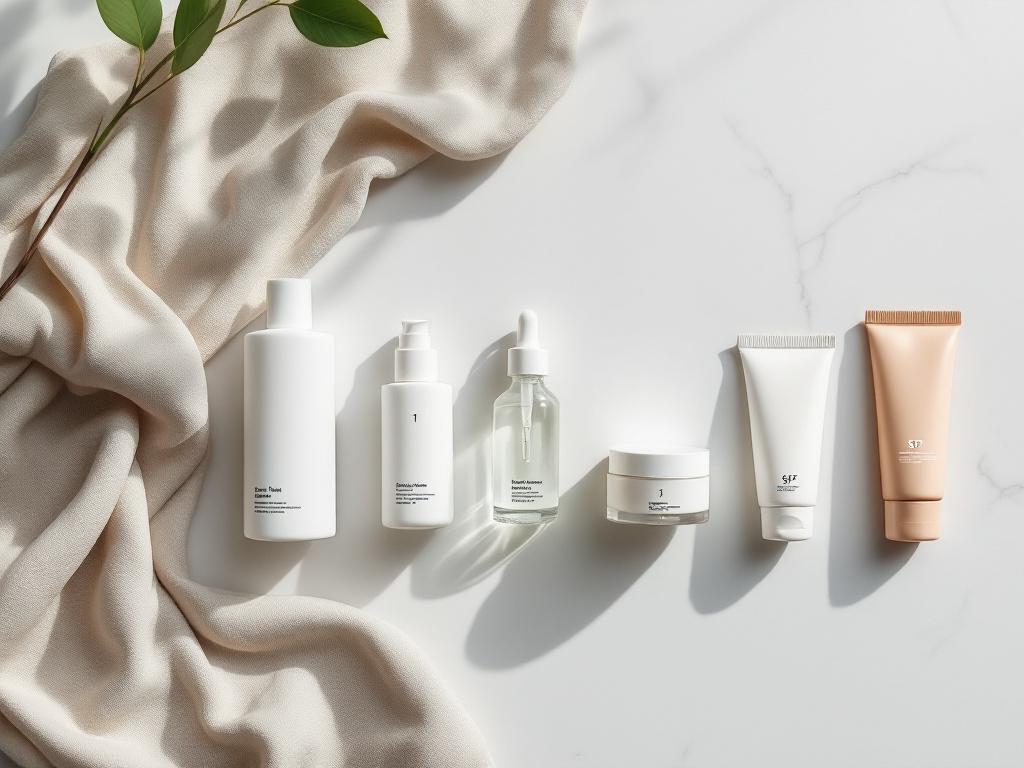
- Oil cleanser or micellar water — Removes makeup, SPF, and sebum-bound pollution. Mandatory if SPF or makeup was worn that day.
- Water-based cleanser (double cleanse) — Removes water-soluble debris and remaining film.
- Active treatment (rotated, not stacked) — Retinoid OR exfoliating acid OR azelaic acid. Use one active per night, 2–3x weekly to start. Build frequency only after four weeks of confirmed tolerance.
- Wait 15–20 minutes — Allows pH normalization and reduces irritation when layering hydrators on top of acids or retinoids.
- Hydrating serum (niacinamide, hyaluronic acid, or panthenol) — Cushions the active and replenishes water content.
- Nourishing moisturizer or barrier cream — Ceramide-rich at minimum.
- (Optional) Facial oil or sleeping mask — Final occlusive layer for very dry skin or low-humidity environments.
The Sequencing Rules That Actually Determine Outcome
- Start with one active, not three. Introduce one new active per 2–3 weeks. Stacking too quickly is the most common cause of routine failure.
- Texture changes are typically reported at 30–60 days of consistent use, per Porcelain Skin's own product guidance [VENDOR SOURCE]. Tone changes are slower — plan in months, not weeks.
- Sunscreen failure equals routine failure. UV reverses progress on every other front; if you skip SPF, you are funding products that undo each other.
- The 12-step routine is a marketing artifact. A focused 4–7 step routine with the right actives outperforms 12 mediocre steps. IWay Magazine notes that K-pop idols themselves often skip steps — the step count is presentation, not protocol.
Ingredient Compatibility — Which Actives Layer Together
The most common reader question after "what should I buy" is "can I use X with Y." Compatibility is mostly a function of pH ranges, irritancy stacking, and oxidation interactions. The matrix below covers the pairings that come up most often.
| Pairing | Compatibility | Recommended Approach | Why It Matters |
|---|---|---|---|
| Retinoid + Vitamin C (L-ascorbic) | ⚠️ Conditional | Vitamin C AM, retinoid PM | Optimal pH ranges differ; same-application irritancy |
| BHA + AHA | ⚠️ Conditional | Same step OK 1–2x weekly; not daily | Synergistic exfoliation but cumulative irritancy |
| Retinoid + AHA/BHA | ⚠️ Advanced only | Alternate nights; stop if redness appears | Stacked irritancy on resilient skin only |
| Niacinamide + Vitamin C | ✓ Compatible | Same routine, either order | The "they neutralize" claim is outdated |
| Niacinamide + Acids | ✓ Compatible | Any order | Buffer-friendly across pH ranges |
| Ceramides + Anything | ✓ Compatible | Final hydration step | No active conflicts; barrier-supportive |
| Benzoyl peroxide + Retinoid | ⚠️ Conditional | Alternate days | BP oxidizes some retinol forms; tretinoin more stable |
Compatibility logic in this matrix reflects generally-accepted cosmetic chemistry consensus. For development teams encoding compatibility rules into apps, validate against an independent dermatology source such as the American Academy of Dermatology before shipping.
The mechanics behind the matrix:
- pH compatibility. Vitamin C as L-ascorbic acid requires a pH below ~3.5 for stability and penetration. Retinoids work optimally closer to pH 5.5–6. Apply them in the same step and you destabilize one or both formulations — hence the AM/PM split that practitioners default to.
- Irritancy stacking. Two mildly irritating actives do not produce mildly combined irritation. They often produce disproportionate inflammation. "Tolerated alone" does not equal "tolerated together," and that is where most novice routines blow up.
- The skin tolerance window. Two readers running an identical routine can have opposite outcomes. Variables: barrier integrity at baseline, climate humidity, hormonal state, cleansing aggressiveness, frequency of physical exfoliation, and sleep quality. Treat published guidance as a starting point, not a guarantee.
For developers building skincare apps, ingredient scanners, or e-commerce ingredient transparency features, hard-coding compatibility logic from blog posts is fragile — formulation pH, concentration thresholds, and CAS-level identifiers all shift the outcome. Structured ingredient APIs return comedogenicity scores on a 0–5 scale, irritancy scores, and regulatory safety status drawn from FDA, EU CosIng, and Health Canada sources, which lets product teams surface compatibility logic programmatically rather than maintaining brittle hand-curated rules.

Compatibility isn't one-size-fits-all. Your tolerance for retinoid plus AHA may look nothing like someone else's — adjust frequency and concentration to your own barrier health, not Instagram trends.
Troubleshooting — Diagnosing Why Your Routine Isn't Producing Results
Most plateaus are not ingredient failures — they are sequencing, frequency, or barrier-integrity failures. Work through these four roadblocks in order before you reach for a new product.
Roadblock 1: Texture won't smooth (rough patches, bumps, flaking)
- Likely causes: Under-exfoliating, over-cleansing, or using a physical scrub that's microabrading the surface.
- Diagnostic check: Does your cleanser leave skin feeling tight after rinsing? That is stripping, not cleansing.
- Corrective path: Switch from physical scrub to chemical exfoliant — lactic acid 5–10% for sensitive skin, salicylic 1–2% for congested skin. Add a hydrating serum step before moisturizer.
- Reassessment window: Four weeks before changing again.
Roadblock 2: Tone is uneven or hyperpigmentation isn't fading
- Likely causes: Inconsistent SPF (the single most common cause), insufficient brightening active, or mistaking PIH for permanent damage.
- Diagnostic check: Are you applying SPF daily — indoors and out — and reapplying after two hours of direct sun?
- Corrective path: Lock in SPF compliance first. Then layer azelaic acid 10% or niacinamide 5–10% with a stable vitamin C derivative. Set a realistic expectation: PIH fades over months, not weeks.
- Reality flag: Deep dermal pigmentation — melasma, sun-damage scarring — often does not fully resolve with topicals. Section 7 covers when professional treatment becomes the right call.
Roadblock 3: Barrier damage (stinging, redness, sudden sensitivity)
- Likely causes: Over-active stacking, retinoid plus acid combo introduced too fast, or aggressive cleansing.
- Diagnostic check: Does plain water sting on application? That is barrier compromise, not coincidence.
- Corrective path: Skincare minimalism for 14 days. Cleanser, ceramide moisturizer, SPF — nothing else. Reintroduce one active at 1x weekly only after redness has fully subsided.
- Reassessment window: 2–4 weeks before measuring barrier recovery.
For brand and app teams building ingredient-substitution tools, surfacing comedogenicity scores and irritancy data per ingredient — rather than relying on user trial-and-error — is exactly the kind of structured query an ingredient API is designed to answer.
Roadblock 4: Skin is hydrated but still looks dull
- Likely causes: Dead-cell buildup, dehydration (distinct from dryness), or lack of light-reflecting finish.
- Diagnostic check: Does skin feel hydrated but read matte or grey? Dehydration. Does it feel tight and look dull? Dryness plus dead-cell buildup.
- Corrective path: Add a humectant-heavy serum (HA plus glycerin), include 1x weekly enzyme exfoliation, and finish with a low-comedogenicity facial oil — squalane or jojoba — for surface light reflection.

When to Escalate — Professional Treatments and the DIY Plateau
Topical skincare has a ceiling. For most adults running a consistent routine, that ceiling is reached at roughly 6–9 months of disciplined use. Beyond that, deeper texture issues — atrophic acne scarring, structural pore size — entrenched pigmentation like melasma or dermal melanin, and significant photodamage typically require professional intervention. The DIY-only path can take you most of the way to a porcelain finish. It rarely takes you all the way.
The professional options worth knowing:
- Chemical peels (professional-grade glycolic 30–70%, salicylic 20–30%, TCA) — Faster surface refinement than at-home equivalents. Typically scheduled quarterly. Downtime runs 3–7 days depending on depth.
- IPL and BBL (intense pulsed light) — Targets superficial pigmentation, redness, and capillary issues. 3–6 sessions for visible results. Limited efficacy on darker skin tones (Fitzpatrick V–VI), and some IPL devices carry burn risk on melanin-rich skin — a board-certified dermatologist's assessment matters more here than in most modalities.
- Laser resurfacing (fractional non-ablative, or ablative CO2) — The most aggressive option for texture, scarring, and deep tone correction. Significant downtime — 1–2 weeks for ablative.
- Microneedling (with or without RF) — Stimulates collagen via controlled micro-injury. 4–6 sessions are standard. Lower downtime than ablative laser.
- Prescription topicals (tretinoin, hydroquinone, oral tranexamic acid) — A middle path between OTC and procedural. Requires dermatologist supervision and monitoring.
When to consult a board-certified dermatologist — not a facialist, not an aesthetician operating without medical oversight:
- Persistent texture that hasn't responded to 8+ weeks of consistent topical actives
- Suspected melasma or post-inflammatory hyperpigmentation older than six months
- Active cystic acne, rosacea, or eczema (these require prescription strategies, not OTC stacking)
- Any pigmented lesion changing in shape, size, or color — urgent, to rule out skin cancer
For specific concerns, verify guidance against the American Academy of Dermatology resources before booking treatment.
A cost-benefit reality check: professional treatments are not a substitute for a foundational routine. They are a multiplier on it. Patients with no daily SPF, no consistent moisturizer, and no barrier discipline will lose laser or peel results faster than patients running disciplined home maintenance. The order is build the routine first, then accelerate.
Professional treatments aren't a shortcut to porcelain skin — they're an accelerator for people who've already optimized their routine and hit a plateau.
Your Porcelain Skin Readiness Checklist
- ☐ I can name which of the three pillars — surface refinement, tone uniformity, or barrier — is currently weakest in my skin, and that's where I'm investing first.
- ☐ I've narrowed my active stack to 2–3 ingredients matched to my actual concern, not 6+ trending ones.
- ☐ My foundational four — gentle cleanser, hydrating serum, ceramide moisturizer, daily SPF 30+ — are non-negotiable and locked in.
- ☐ I've mapped my morning and evening routines with correct layering order (thinnest → thickest) and the 15–20 minute wait after exfoliating actives.
- ☐ I'm committed to a minimum 4–8 week assessment window before judging an active's effect, and 12+ weeks for tone-related changes.
- ☐ I introduce new actives one at a time, spaced at least two weeks apart, starting at 1–2x weekly frequency.
- ☐ I've identified my current roadblock — texture, tone, barrier, or dullness — and the corrective path that goes with it.
- ☐ I've decided whether I'm continuing topical-only, or whether my goals require consulting a board-certified dermatologist for procedural options.